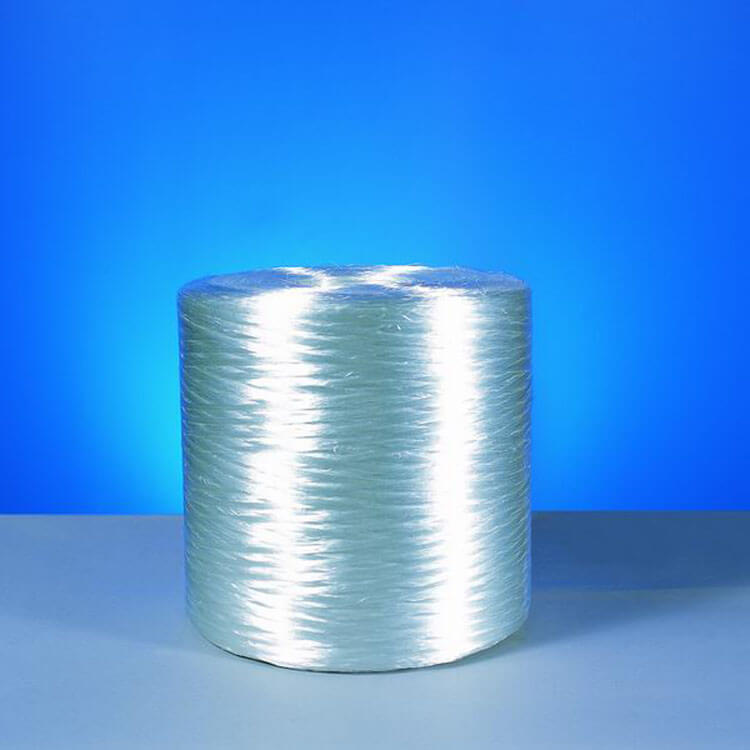
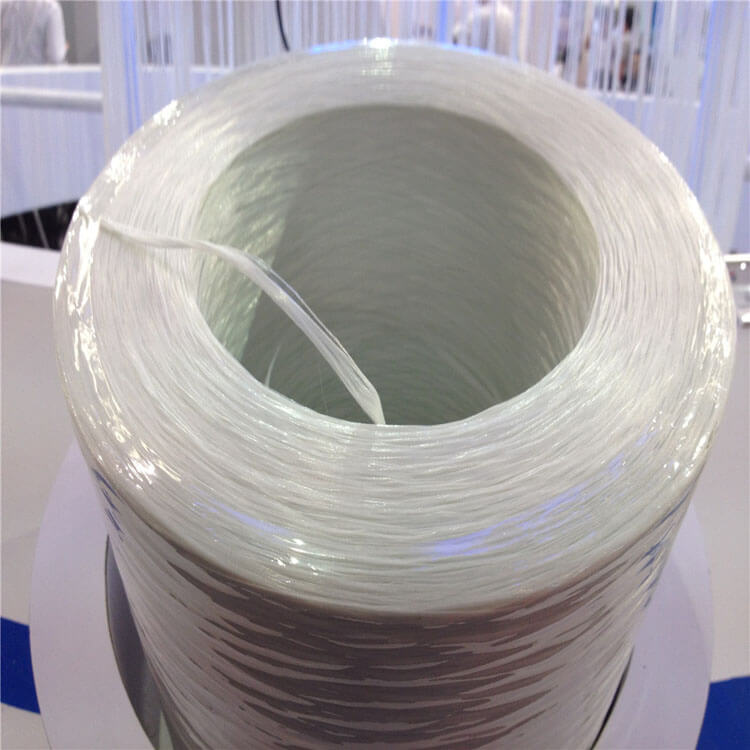
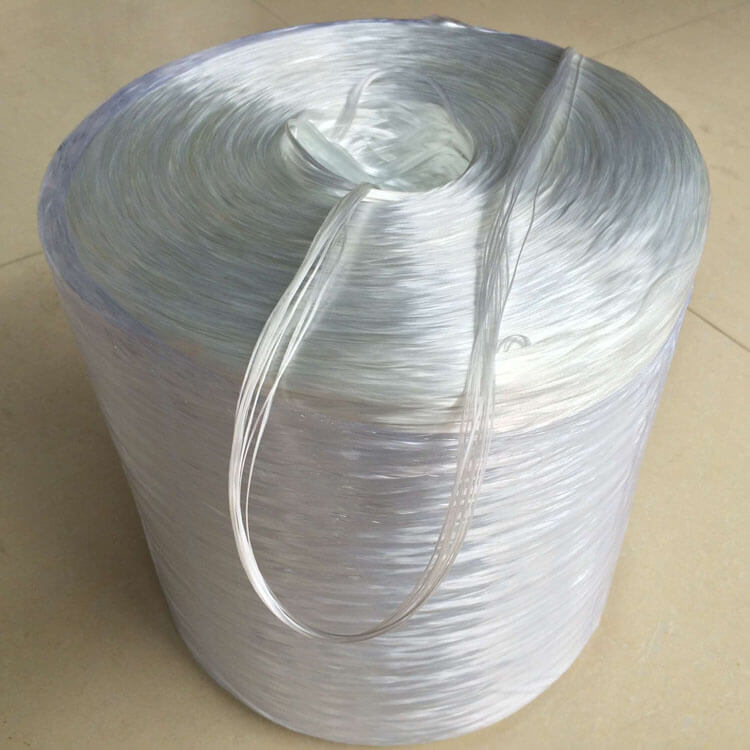
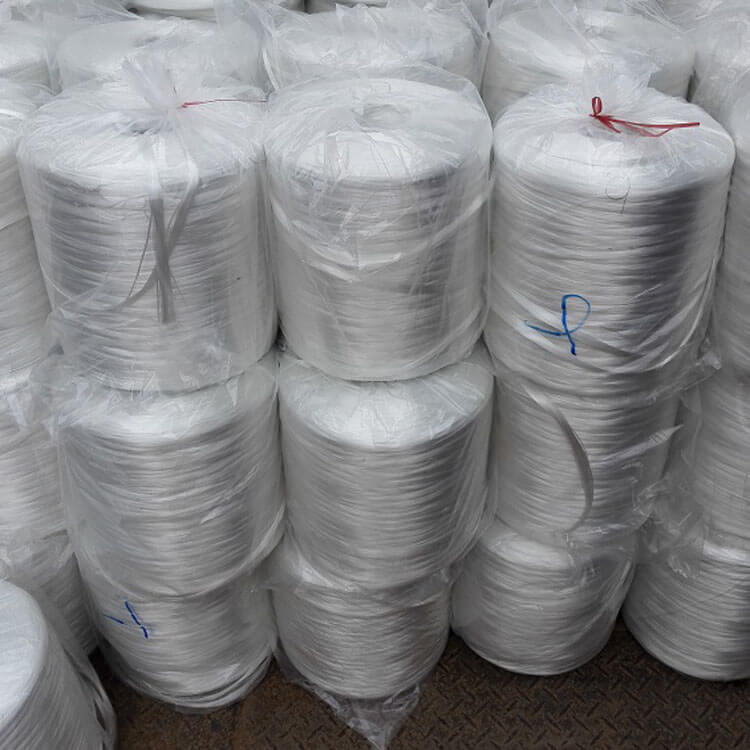
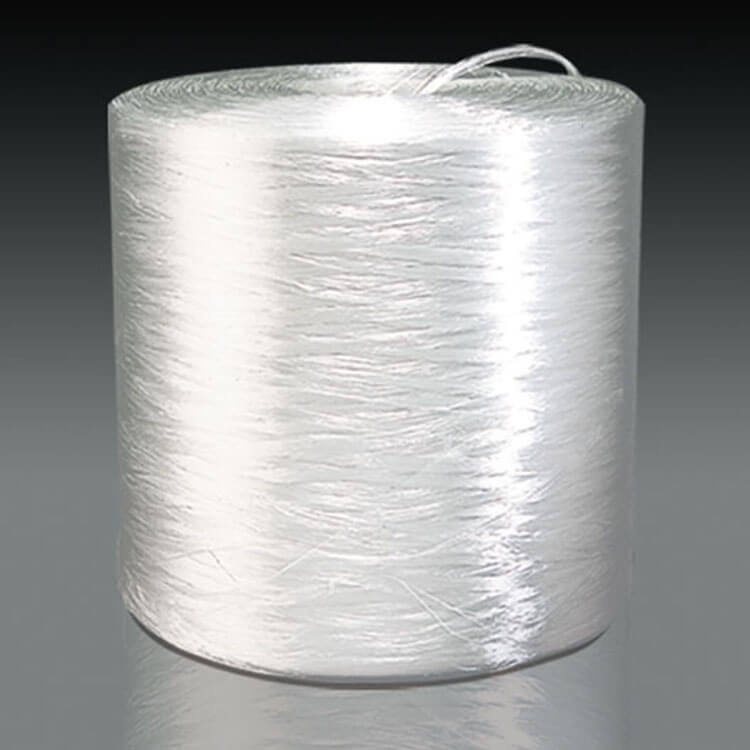
Roving for Filament Winding
Filament winding roving is mainly compatible with unsaturated polyester, polyurethane, vinyl, epoxy and phenolic resins, etc. Its final composite product delivers excellent mechanical properties.

Traditional process: Continuous strands of resin-impregnated glass fiber are wound under tension onto a mandrel in precise geometric patterns to build up the part which is cured to form the finished composites.
Continuous process: Multiple laminate layers, composed of resin, reinforcement glass and other materials are applies to a rotating mandrel, which is formed from a continuous steel band continuously traveling in a cork-crew motion. The composite part is heated and cured in place as the mandrel travels through the line and then cut into a specific length with a traveling cut-off saw.
Features
* Even tension
* Low fuzz
* Fast wet-out
* High strength
Technical Data
| Item |
Density Tex |
Filament Diameter μm |
Moisture content (≤)% |
LOI % |
Compatible Resin |
| PT-ECR22-2000D | 2000 | 22 | 0.10 | 0.40-0.70 | UP, VE, EP |
| PT-ECR17-2400D | 2400 | 17 | 0.10 | 0.40-0.70 | |
| PT-ECR24-2400D | 2400 | 24 | 0.10 | 0.40-0.70 | |
| PT-ECR24-4800D | 4800 | 24 | 0.10 | 0.40-0.70 | |
| PT-ECR24-9600D | 9600 | 24 | 0.10 | 0.40-0.70 |
Application